Pages

Tuesday, 15 December 2015

A R T


 On Friday 30th October I attended for the official opening of Paul Cassar's Exhibition 'Sprectrum'. Maritime Museum - Birgu.  In this exhibition there were 66 pieces consisting of abstract paintings except 5 pieces which are two portraits and city scapes.  The exhibition run till 22nd November 2015.  From this Large selection I chose 2 paintings for task 1 which are:
  1. Loved To Be Loved, Oil On Canvas 2011 30x35cm.
  2. Idyillic Ambience, Oil On Canvas 2011 54x6cm.

1.  Loved to be Loved, I noticed that the artist used thick paint and created texture by the use of the pallet knife.  I also noticed that a strip of the braes glued(collage) on top right of the painting.  Paul Cassar's composition is very well balanced.  The Artist painted stripes and ribbons with different colours, consisted of red blue, green and white on yellow background.  On the background these are some drip paint in various colours.  With this tiny dots the painting is seen as a whole. 


Figure 1: Loved To Be Loved (Oil On Canvas)


5.  Idyillic Ambience, is a semi-abstract painting.  Paul Cassar depicted a landscape based on yellowish hues.  In the fore ground a sign of grass and red dots of paint make it lookalike a poppy field.  This painting has a lot of groove in paint and done by means of scratching the wet paint by the end of the brush handle.  This effect is very interesting.  These makes create texture effects and also indicates perspective.  On the left of the viewer the stripes of the brass are shaped like flowers and grass.  This enhances the luminosity of the composition.


Figure 2: Idyillic Ambience (Oil On Canvas)


  I also visited the National Museum of Fine Arts in Valletta.  This is one of the oldest Baraque palace built by the Knights of St. John.  The wonderful museum contains a selection of works of art executed by many local and foreign artists. Among these works,  I was impressed by the work of: 
  1. Lazzaro Pisani - Death of Abel (1854-1952) Oil on Canvas
  2. Frank Portelli - Agony of Christ in the Garden of Olives (1922-2004) Oil on Canvas
  3. Caeser Attard - Pregnant Madonna (1946) Oil On Canvas

    Lazzro Pisani was a local artist born in Malta.  He studied art in the British academy in Rome.  The 'Death of Abel' was an important landmark for Pisani's career.  He won a silver Medal for this opulent work when it was exhibited in Colonia in London in 1885.  In this work Pisani shows a very skillful and excellent draftsmanship.  The painting is oil on canvas the composition is very well balanced and it shows how Pisani depicted every detail with a fine art.


Figure 1: Death Of Abel. (Oil On Canvas)


  Frank Portelli is a very well known for his geometric forms in his paintings.  In this painting he used this geometric style, where he play with these forms and creates an amazing composition.  He shows the agony of Christ by exaggerating the pose of praying. In this composition Christ  is in the left side of the viewer consequently the composition is balanced by the three apostles sleeping on the right of the viewer.  He used dull colours to show agony of that moment while the paintings turns slightly into an abstract form.


Figure 2: Agony of Christ in the Garden of Olives. (Oil On Canvas) 


  Ceaser Attard (B1946) is one of the important artist of the modern and contemporary art in Malta.  His works are mostly look spontaneous and expressive.  Ceaser does not afraid to reach out boundaries.  In the painting he had made of the 'Pregnant Madonna' was a controversial work at that time, although it was accepted for Sacred Art Exhibition of 1970 the work was criticized for its nudity.  The painting is characterized with the techniques of free brush strokes.  The figure is stylized and slightly flat, some of the figure is integrated into the background.The painting has very influences  of the abstract forms.  The pregnant Madonna and the background in this composition are well integrated that makes the painting looks as a whole.      
  
 
Figure 3: Pregnant Madonna. (Oil On Canvas)


Design

The MFCC Home and Interiors exhibition

        Date: 23-10-2015
        Venue: T'Qali

For this task I chose 5 designs, which are:
  1. Wooden Door
  2. Chesterfield Sofa 
  3. Lava Stone Table
  4. Victorian Style Sofa
  5. Bathroom Mixer
1.  This one wing internal wooden door is designed in horizontal stripes.  It has fine narrow rectangular panels.  The glass panels are long just as the width of the wing.  The door knob and the lock are separate.  It is a typical lever.  Although it is a simple design it has a continuous pattern.


Figure 1: Wooden Door.

2.  Chesterfield Sofa, it is a modern two seater comfy sofa.  It has two cushions on both sides.  This a buttoned back sofa and made of leather.  It's a low seat base.  The couch's rounded arms comfortable.  This sofa is very elite.


Figure 2: Chesterfield Sofa.

3.  Lava Stone Table.  This Lava stone is made in Sicily.  This lava stone table has a very decorative and artistic design.  It has a rectangular shape with rounded ends.  This Lava top is based on wrought iron structure.  This has an elegant design.


Figure 3:  Lava Stone Table.

4.  Victorian Style Sofa.  This sofa is very orientaly decorated.  The upholstery consists of two buttoned back cushions.  The structure has a very elaborated carving.  This elaborated carving style makes the sofa looks wealthy.


Figure 4: Victorian Style Sofa. 

5.  This bathroom mixer accessory is a very modern design.  The mixer has a squarish nickled design and it is polished to high precision.  This mixer tap spout is seperated from the hot and cold knobs.  It has a stylish and elegant design.


Figure 5: Bathroom Mixer.
DESIGN


Art Nouveau

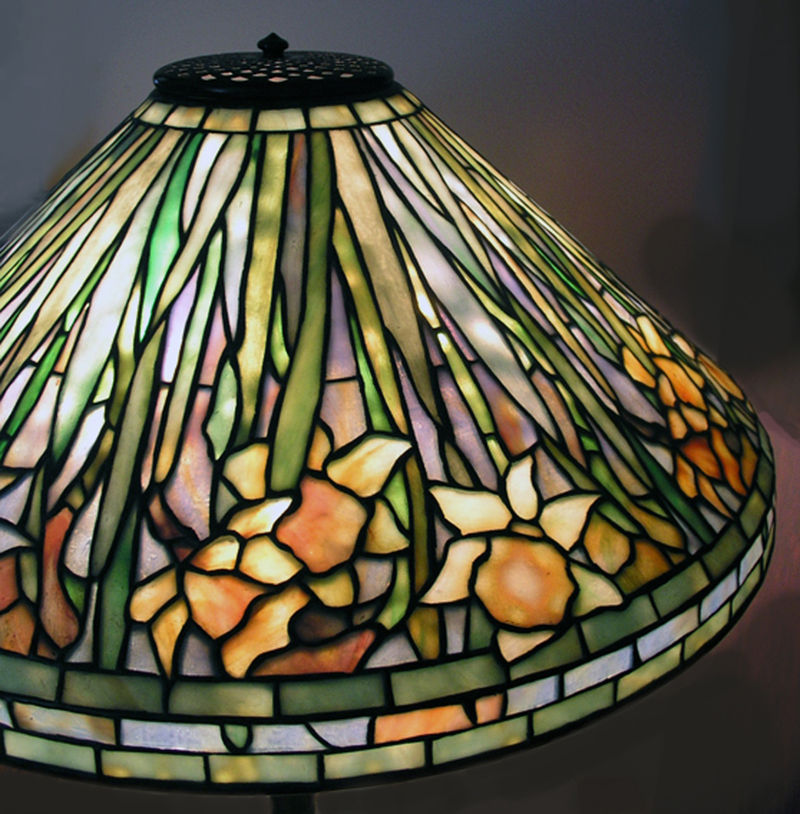
   Art Nouveau – New Art, was in vogue between 1890 and the first world war in 1914. This new style at that time became part of everyday life. Art Nouveau movement was popular throughout Europe and beyond. This fashion style focuses on decorative in various arts designs and architecture. The movement abandons the historical styles of the 19th century and developed new grounds for their style which had an aesthetic, elegant and graceful appearance.
  The aesthetic for Art Nouveau artists was essential for their designs. These artists drew their inspiration for their style mainly from organic, geometric forms, natural forms that have more angular contours. Most of the typical decorative patterns were flat. In this design   were included leaf and tendril motifs, organic forms with rounded shape. They also used for their decorative style, the hair and curvaceous bodies of beautiful women. The characteristic of Art Nouveau patterns in their design was to use the line in elegant manner often taking from; the form of flower stalk and buds, vine tendrils, insect’s wings and other graceful natural objects.  These patterns were also included in architecture, facades and interior. Architecture became surrounded with this decorative style. In this creation of combined this style in architecture became an ornament structure consists of organic rhythmic forms  The most prominent artists in the Art Nouveau movement were the Scottish architect and designer Charles Rennie Mackintosh known for his predominantly geometric line, the Belgian architects Henry van de Velde and Victor Horta  known for their delicate structures, Hector Guimard who was an important figure in that regard, the American glassmaker Louis Comfort Tiffany, the French furniture and iron works designer Louis Majorelle, Toulouse-Lautrec known for his illustrator and lithographer. The most original artist of the movement perhaps was the Spanish architect and sculptor Antonio Gaudi who went beyond and transforms architecture into curving, rounded, organic constructions.

  Along this term this movement eliminated the traditional way of the arts and developed new style which appeared as a free arts.  This can be distinguished in various works in such as painting, sculpture, craft-base decorative art, furniture and in many architectural buildings .The Art Nouveau movement were lose its popularity after Art Deco became in fashion in the 1920’s, but 1960’s Art Nouveau was brought again in fashion and now it is consider as the most influent and inspiration  for the modernism. 
  Stair Case Design by Victor Horta.

gaudi1 La Sagra Familia by Gaudi.


  Stained Glass by Louis Comfort Tiffany


Geometric Line by Charles Rennie Mackintosh


References: 

https://en.wikipedia.org/wiki/Art_Nouveau

http://www.britannica.com/art/Art-Nouveau

Pictures: Wikipedia


Futurism

  Futurism developed in Italy by Fillips.  Tommano Marinetti.  Marinetti was an Italian poet playlist.  He published the Movement of Futurism on the front page of Paris newspaper 'Le Figaro' on the 20th Febuary 1909.  This movement was given importance to the new importance to the new form of speed, the beauty of speed.  The Futurist opened a new horizon to art and design developments.

  The Futurist were very skilled and trained artists in nearly everything in art including ceramics, paintings, sculpture, graphic design, theater, interior design, literature, music and architecture.  Their main objective was how to create speed, movement and energy into art.  Futurism were inspired by speed, machinery, technology progress, noises and the hussle and bussle of the cities.  It was a movement that particularly rejected not even the essential aspects of the classic past, but everything that was not totally new.  The artists of futurism were mostly successful but much of the ideas of the movement were generated through writing and several statements by the movement were published.  The subjects they used were taken from everyday life and showed then either in motion on as seen from a moving object such as people running in different directions, cars driven at speed, musicians playing their music instruments and so on.  Among the artist that left an impact in the movement are Umberto Boccioni, Carlo Cara, Giacomo balla, Lawrence Atikinson, Fernard Leger and Valmir Tatlin.  In their paintings and designs they usually used light and colour down into a series of dots and geometrics.  The Futurist artists tried to compare movements of the exposure shows of the different stages of the same movement, then the artist placed it next to each other partially overlap.  With this method the Futurist achieved effects of movements.

  Futurism influenced alot of the predecessors of the modern art movements, which also affected the development of the graphic design.  The writings, philosphies and aesthetic features of Futurism specifically had and still have a major influence at art and designers.      
 Monument To The Trid International by Valmir Tatlin. 


Umberto Boccioni, 1913, Synthèse du dynamisme humain (Synthesis of Human Dynamism), sculpture destroyed


1918, L'Ovale delle Apparizioni (The Oval of Apparition), oil on canvas, 92 x 60 cm, Galleria Nazionale d’Arte Moderna, Rome, or Collezioni R. Jucker, Milan


Giacomo Balla, 1912, Dinamismo di un Cane al Guinzaglio (Dynamism of a Dog on a Leash)


 The sky Pilot by Lawrence Atkinson  (1918)
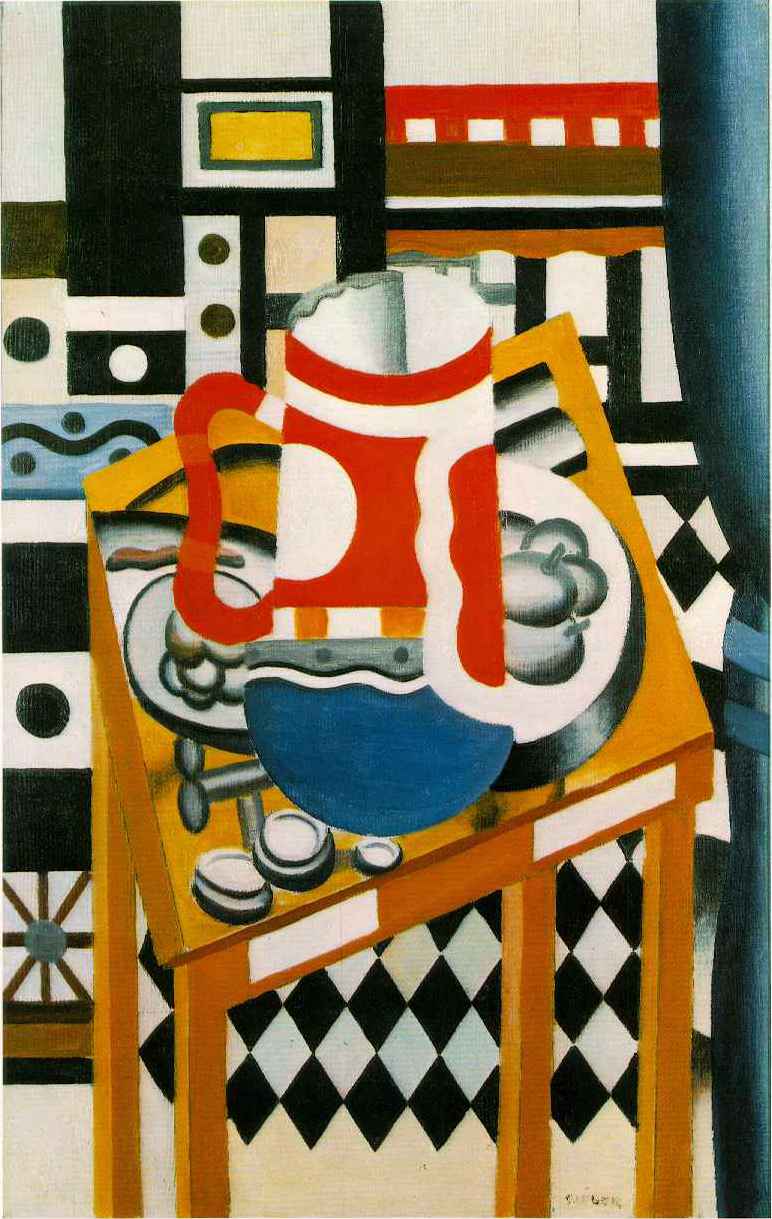

 Still Life with a Beer Mug, 1921, oil on canvas, Tate, London by Fernand Leger.

Referances:
The Story Of Modern Art (1995 Norbert Lynton)
Crash Course In Art (1994 Eva Howarth)
https://en.wikipedia.org/wiki/Futurism
http://www.britannica.com/art/Futurism
Pictures: Wikipedia

                                                    ART 


                                                 IMPRESSIONISM


   The impressionism works are so well known and accepted on our days.  During their time in the 1860's these artists were too revolutionary to be accepted easily.  In fact many good paintings by these artists were rejected by the official French salon.  Then their works were exhibited in Exhibition so-called "Salon des Refuses" - Exhibition of works reflected. However a number of these artists who ere represented in the "Salon des Refuses" formed their group which later they became known as the impressionists.

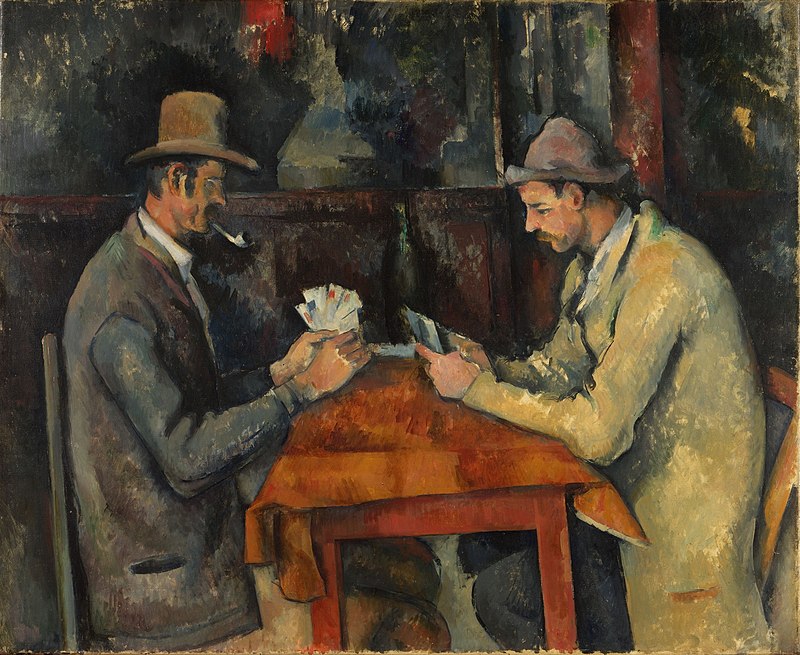
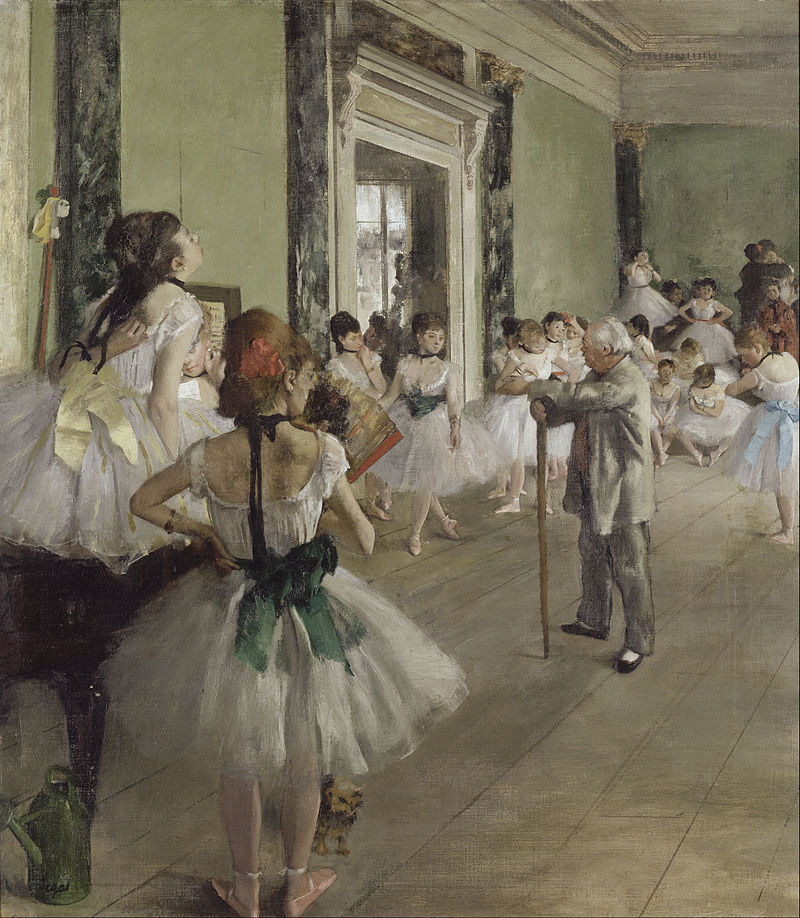
  This group was formed in December 1873 by Monet, Renoir, Picasso, Sisley, Cezane, Berthe Morisot, Edgar Degas and several other artists. The name Impressionist came after the critical article by the news paper 'Le Chaeivari' on the painting by Claude Monet Impression Sunset (impression, Sole ilevant) which stated word play with the title. The article titled 'The Exhibition of the Impressionists' by Leroy.  Leroy described the work of Monet was at a most a sketch, and could not be as a finished work.

  The Impressionists artists were the first to take their easels out of doors and painted immediately what they saw on site.  They wanted to paint only what they saw, what appeared to the eye in a particular light at a particular time of the day.  They needed to capture the fleeting moment.  So this moment developed a style, techniques and approche to using colour in their paintings.
  
  The Impressionists disconnected that the shadow of an object is broken up with dashes of its complementary colour.  The bulk of the impressionists works are mainly Landscapes , seascapes, and Townscapes painted in oil.  These artists work fast on their canvas to depict the atmosphere of a particular time of day and the effects of different weathers conditions. The energy of their brush works are very spontaneous these makes the paintings loom fresh as if its painted just a few minutes ago.

 However the impressionists marked their sign in the history and became the most popular movement in the history of art.


Impression: The Sunrise
(Impression: soleil levant)
1873


Les joueurs de cartes (The Card Players), 1892–95, oil on canvas, 60 x 73 cm, Courtauld Institute of Art, London by Paul Cezanne.

Lane Near a Small Town (c. 1864), one of the earliest extant paintings by Sisley.


 Pablo Picasso, Les Demoiselles d'Avignon, 1907, oil on canvas, 8' x 7' 8" (243.9 x 233.7 cm) (Museum of Modern Art, New York)

 Les fiancés, dit le ménage Sisley - 1868 by Renior.

 Berthe Morisot, Grain field, c.1875


 The Dance Class (La Classe De Dance)  1873–1876, oil on canvas, by Edgar Degas.

References:
https://en.wikipedia.org/wiki/Impressionism
Crash Course In Art (1994 Eva Howarth)
Photos: wikipedia
Cubism

  Cubism was created by artists Pablo Picasso a Spanish painter, sculptor, printmaker, ceramist,stage designer, poet and playwright 1881-1973 and George Braque a French painter, collagist, draughtsman, printmaker and sculptor 1882-1973. This Movement was influenced by the late works of Paul Cezanne. Cezanne struggled in his studies to understand the different angles in a still life, landscape or portraits.  Cezanne recombined this observation and depicted as a whole picture. The Cubists Movement described that Paul Cezanne was their mentor.
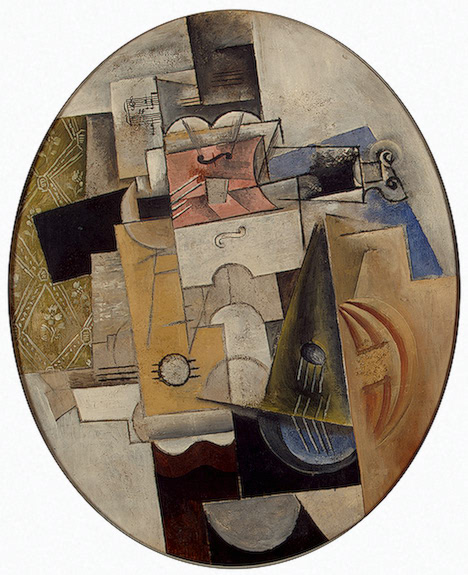
  The term of Cubism was named by the French art critic Louise Vauxcelles after he saw the landscape of Braque   l’Estaque in 1908.  Vauxcelles called the geometric forms ‘abstracted cubes’.  Other  influences on early Cubism are from primitive art were Picasso show this evidence, in his famous painting  Les Demoislles d’ Avignon painted in 1907. Picasso and Braque eliminate the traditional way of painting, they worked and developed their style by ignoring the rules of perspective and enfaced to show objects from more than one angle. They wanted to depict an object from all different perspectives. If they decided to paint a musical instrument they tried to show all the different facets of the instruments at once by observing and using their memory. The traditional painters painted what they saw; this method is known as perceptual, while the Cubist movement wanted to depict what they knew to be there which is known as conceptual art. The Cubist explained how their new visual language justified the truth,  example: ‘if you close your eyes and try to remember what a particular object look like you may well find that you recall it as if seen simultaneously from different angles’.  However the Cubist painters dismantled the object in their minds into a number of geometric planes. Each plane is a different facet of that object. Then the artists composed these planes as whole picture. While Picasso and Braque are the co-founders of this movement, this was adopted and further developed by many painters such as Fernard Leger, Robert and Sonia Delaunay, Juan Gris, Roger de la Fresnaye, Marcel Duchamp, Albert Gleizes, Jean Metzinger  and Diego Rivera.

 Although the Cubist painters reject all the traditional way of paint, they surely are the most important movement in the art history of the 20th century that broke the old boundaries and opened new horizon for modern art. 


Picasso 'The three women'     


   Picasso 'Instruments of Music'


 Braque   l’Estaque in 1908.


  Discs, 1918 by Fernand Leger.


 Diego Rivera, Maternidad, Angelina y el niño Diego (Motherhood, Angelina and the Child Diego), circa August 1916, oil on canvas, 134.5 x 88.5 cm, Museo de Arte Carrillo Gil.


 Jean Metzinger, 1912, Danseuse au café (Dancer in a café), oil on canvas, 146.1 x 114.3 cm, Albright-Knox Art Gallery, Buffalo, New York. Published inAu Salon d'Automne "Les Indépendants" 1912, Exhibited at the 1912 Salon d'Automne

 Albert Gleizes, 1911, Portrait de Jacques Nayral, oil on canvas, 161.9 x 114 cm, Tate Modern, London. This painting was reproduced in Fantasio: published 15 October 1911, for the occasion of the Salon d'Automne where it was exhibited the same year.

References:
Crash Course In Art (1994 Eva Howarth)
https://en.wikipedia.org/wiki/Cubism

http://www.britannica.com/art/Cubism

The story of art (1989 Gombrich)

Photos: wikipedia